|


| Quantity: | |
|---|---|
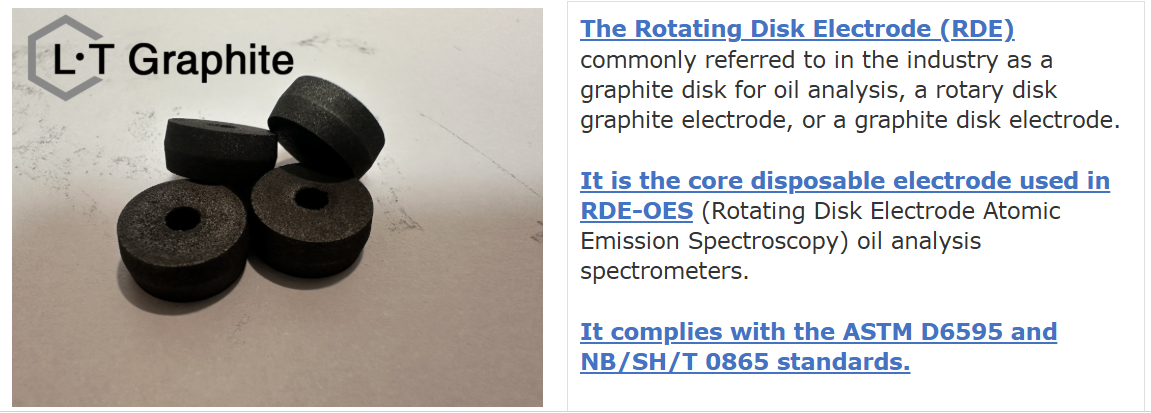
1. A graphite disc is driven by a motor to rotate continuously; its lower section is immersed in the oil sample, and it relies on surface adhesion to constantly transport a thin film of lubricating oil or fuel into the discharge gap.
2. High-voltage alternating current (AC) is applied between the disc (cathode) and the graphite rod positioned above it (anode), generating an electric arc.
3. The electric arc produces high temperatures ranging from 5,000°C to 8,000°C, vaporizing and ionizing the oil film; wear metals and additive elements within the oil are excited, emitting light at their respective characteristic wavelengths.
4. A spectrometer disperses and captures the optical signals, converting them into concentration values (ppm) for various elements.
In summary:
The system utilizes the continuous rotation of the disc to transport the oil sample and employs arc excitation to achieve rapid multi-element analysis of in-service oil.