
 |


| Quantity: | |
|---|---|
project | Indicator Requirements | Detection methods |
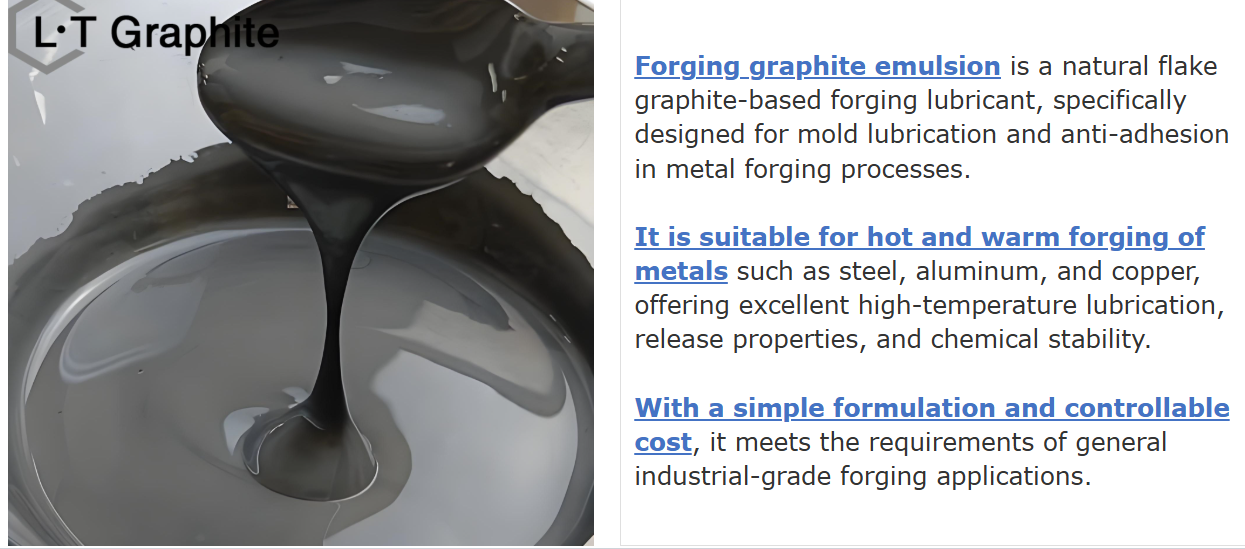
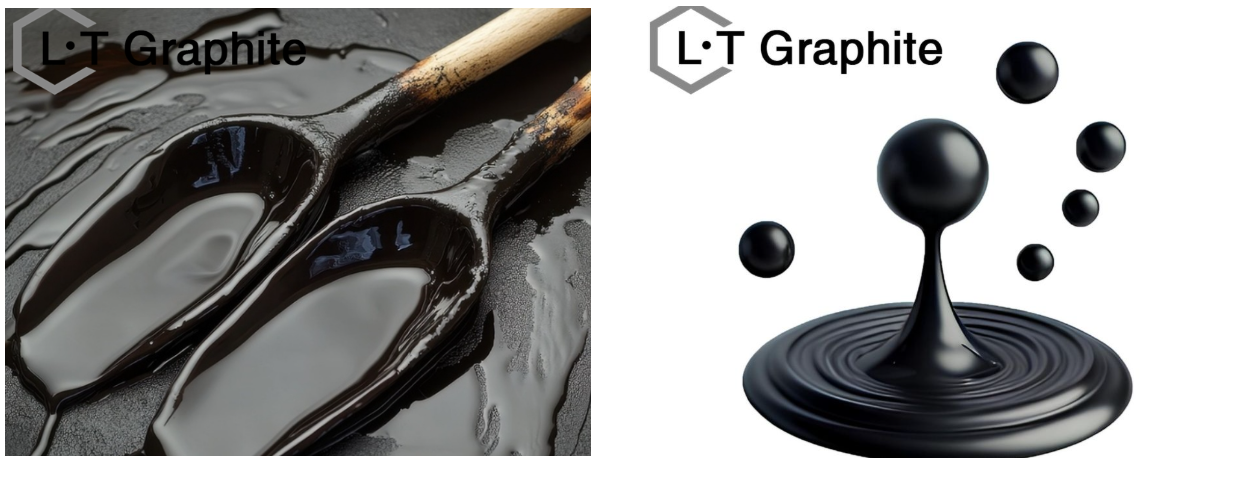
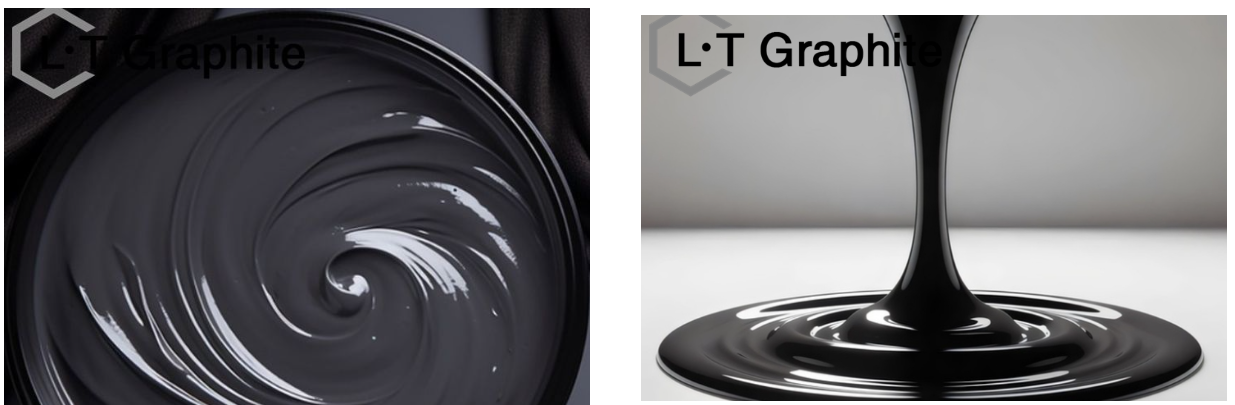
Appearance | A black, uniform milky liquid with no obvious layering or sedimentation (it can be evenly dispersed after stirring). | Visual inspection (observation after stirring) |
Solid content (%) | 26-28 | GB/T 257-2020 "Determination of Coatings (Weighing Method)" |
Graphite content (%) | 2 5 | Gravimetric method (weighing after acid treatment to remove impurities) |
Viscosity (25℃, mPa·s) | 50-60 ( Thickener adjustment to ensure good atomization and prevent dripping during spraying ) | GB/T 1723-1993 Determination of Viscosity of Coatings (Ford Cup 4 Method) |
pH value | 9-11 (Sodium metasilicate is an alkaline dispersant to maintain system stability) | GB/T 1484-2020 General Rules for Determination of pH Value of Chemical Products (pH Measurement) |
stability | Centrifuge at 3000 rpm for 15 minutes; no stratification or obvious precipitate was observed. | Centrifugation method (laboratory simulation of long-term storage stability) |
High-temperature lubricity (500℃) | Coefficient of friction ≤ 0.15 (simulating lubrication performance under high temperature forging conditions) | High-temperature friction and wear testing machine (ASTM G133 standard) |
Corrosion resistance | Immersion in steel and aluminum molds at room temperature for 72 hours showed no corrosion or rust. | Loss-in-weight method (weighing the mold before and after and observing the surface condition) |
Dilution ratio | Original liquid:water = 1:10 - 1:20 ( adjust as needed based on forging temperature and mold material) | — |
Element | content(%) | effect | Compliance Statement |
Natural flake graphite | 23 | The core lubricating component is heat-resistant (up to 600℃ or higher) and forms a lubricating film to reduce friction between the die and the forging. | Complies with GB/T 3518-2018 "Flake Graphite" standard |
Thickener | 1 | Adjusting the system viscosity to prevent graphite sedimentation and ensure uniformity during spraying (common thickeners include sodium carboxymethyl cellulose and xanthan gum). | It complies with GB 2760-2024 "Standard for the Use of Food Additives" (Industrial thickeners must be non-toxic to avoid contaminating forgings). |
Sodium metasilicate | 15-20 | Dispersants and stabilizers improve the dispersibility of graphite in water and prevent aggregation; they also adjust the pH value to maintain an alkaline environment and enhance the stability of the system. | Meets the HG/T 2568-2015 standard for industrial sodium metasilicate. |
preservative | 0.5 | Antibacterial and antifungal properties ; dosage of 0.5% ensures no mold growth or spoilage during storage. | It complies with GB/T 21073-2007 "General Technical Requirements for Preservatives" (Industrial preservatives must be low in toxicity and environmentally friendly). |
water | Replenish to 100% | Solvents and diluents reduce usage costs and ensure smoothness during spraying. | Tap water or deionized water (deionized water is better as it reduces the impact of impurities on stability). |
1. Demolding effect.
The forgings have a smooth surface, free from defects such as sticking to the die, scratches, and cracks, and can be demolded ≥ 5 times consecutively (using the same die).
2. Film-forming properties.
A uniform and continuous film forms within 3-5 seconds after spraying, and the film does not turn white or crack after drying.
3. High temperature antioxidant properties.
Heating at 500ºC for 2 hours showed no significant oxidation or peeling of the film, and the integrity of the lubricating film remained ≥80%.
4. Environmental protection.
It has no irritating odor and a VOC content of ≤50g/L (water-based system, meeting general industrial environmental protection requirements).
1. Metal Processing and Forging:
As a highly effective high-temperature lubricant and mold release agent, graphite emulsion significantly reduces friction between molds and workpieces, extending mold life by 1-3 times and improving the surface quality of forged parts. It is commonly used in forging, extrusion, and roll forging processes, applied evenly to the mold surface by spraying.
2. Electronic Device Manufacturing:
Utilizing its excellent conductivity, graphite emulsion is used in the production of conductive coatings and electromagnetic shielding materials. Specific applications include additives for lithium battery cathode materials, multilayer capacitors, conductive treatment of cathode ray tubes, through-hole plating of circuit boards (black hole liquid), conductive coatings for high-voltage cable sheaths, and the manufacturing of color display devices.
3. High-Temperature and Corrosion-Resistant Sealing:
In metallurgy and glass manufacturing industries, graphite emulsion can be applied to the surface of refractory materials to enhance their thermal shock resistance and oxidation resistance. It is also used as a chemical corrosion-resistant sealant, anti-sticking agent, and anti-corrosion coating, suitable for steel pipe manufacturing, glass product demolding, and other applications.
4. Other Industrial Applications:
Graphite emulsion is also used in screen printing of electronic circuits, tungsten and molybdenum wire drawing, fiberglass coating, and metal cutting lubrication. Its environmentally friendly properties and ease of use have also promoted its widespread adoption in more precision manufacturing scenarios.


