
 |


| Quantity: | |
|---|---|
Product Description
Applications
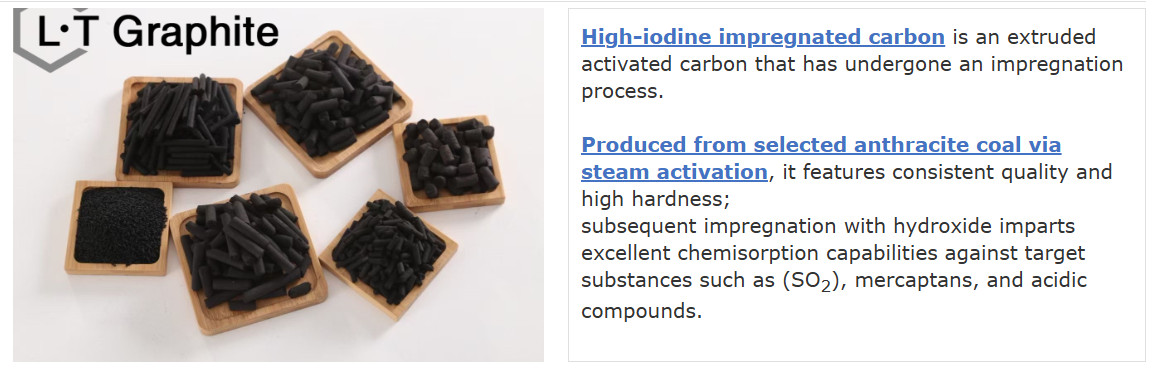
High-iodine impregnated activated carbon-typically produced via specialized processing to achieve exceptionally high iodine adsorption values-is characterized by a highly developed microporous structure and a massive specific surface area. These attributes enable superior performance in applications requiring the efficient adsorption of small-molecule substances.
1. Air and Waste Gas Treatment:
Used to purify indoor air by removing volatile organic compounds (VOCs) such as formaldehyde; also used to treat malodorous and toxic industrial waste gases containing sulfur.
2. Water Treatment:
Employed for the advanced purification of drinking water, effectively removing residual, odors, organic pollutants, and trace heavy metals. In wastewater treatment, it facilitates advanced processing to ensure compliance with discharge standards or to enable water reuse.
3. Food and Beverage Industry:
Used for the decolorization and purification of products such as white sugar, monosodium glutamate (MSG), and citric acid; in alcohol production, it removes off-flavors, improves taste, and clarifies the liquid.
4. Industry:
Serves as a critical refining material for the decolorization, pyrogen removal, and purification of active ingredients (APIs)-such as antibiotics, vitamins, and antipyretic-analgesics-ensuring high product purity.
5. Chemical Industry and Electroplating:
Used for the refining and decolorization of various chemical products and dye intermediates; in the electroplating industry, it purifies plating baths by removing organic impurities, thereby ensuring the quality of the plated finish.
6. Solvent Recovery:
Utilized in industries such as printing, coating, and chemical manufacturing to adsorb and recover organic solvents (e.g.,ketones, alcohols) volatilized during production, facilitating resource recycling.
7. Protection and Catalyst Support:
Acts as a core adsorption material in gas masks and protective clothing; additionally, its vast specific surface area makes it an excellent catalyst support.
Technical parameters
Advantages
1. Extremely high iodine adsorption value:
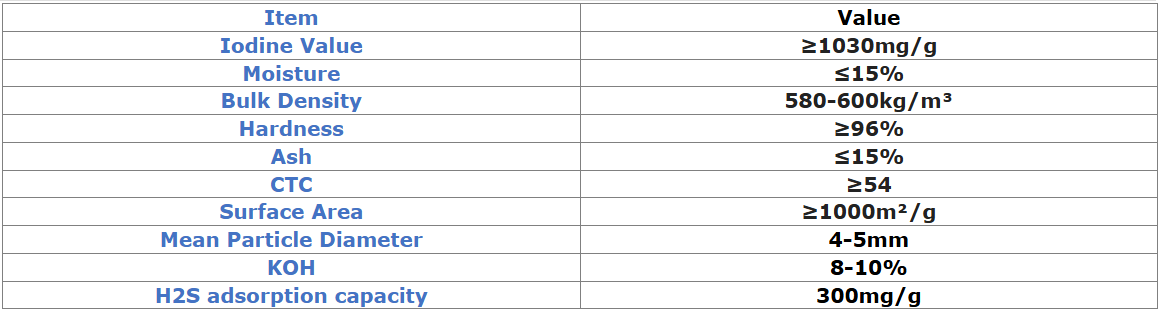
The iodine value is typically ≥1000 mg/g, serving as a key indicator of the extent of its microporous structure development.
2. Highly developed microporous structure:
Pore sizes are predominantly in the micropore range (<2 nm), and the specific surface area is usually ≥1000 m²/g; this grants it exceptional adsorption capacity for small-molecule substances (such as organic gases and low-molecular-weight organic compounds).
3. Fine particle size and high density:
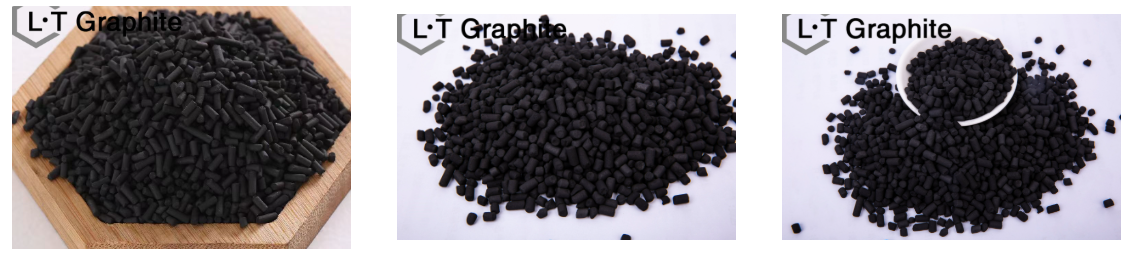
Due to the high proportion of micropores, the particles are relatively fine, and the bulk density is high.
4. Chemical capture and catalytic conversion:
Impregnants (such as iodides, amines, and metal oxides) react chemically with target pollutants (e.g., radioactive iodine, H2S), either immobilizing them within the pores or converting them into forms that are easier to capture, thereby significantly enhancing effective capacity and removal rates.
5. High selectivity and specificity:
Different impregnant systems target specific pollutants. For example, iodide/amine systems are designed to capture iodine and organic iodine (in nuclear industry applications); alkaline systems are used to control acidic gases; and metal oxide systems are employed to oxidize or immobilize specific pollutants.


