|


| Quantity: | |
|---|---|
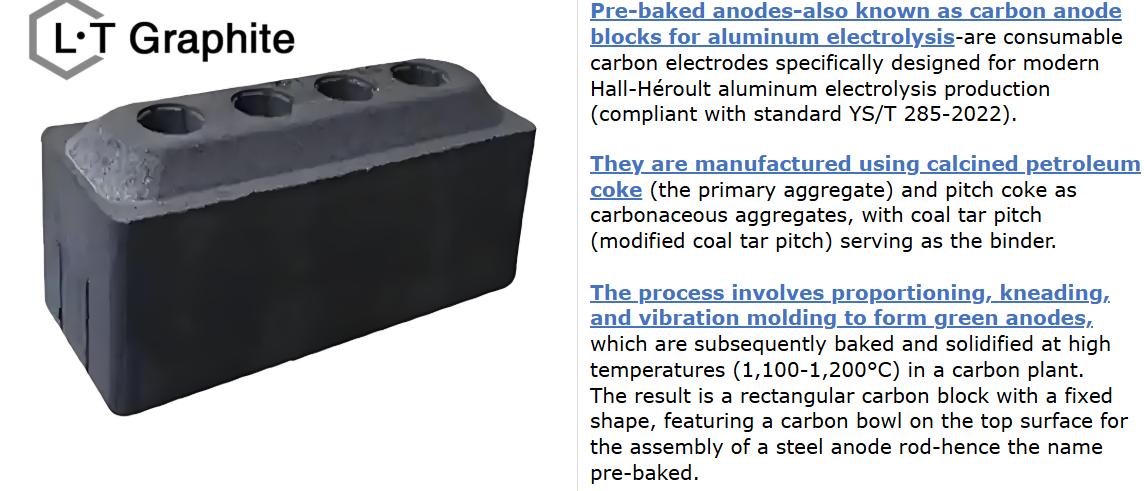
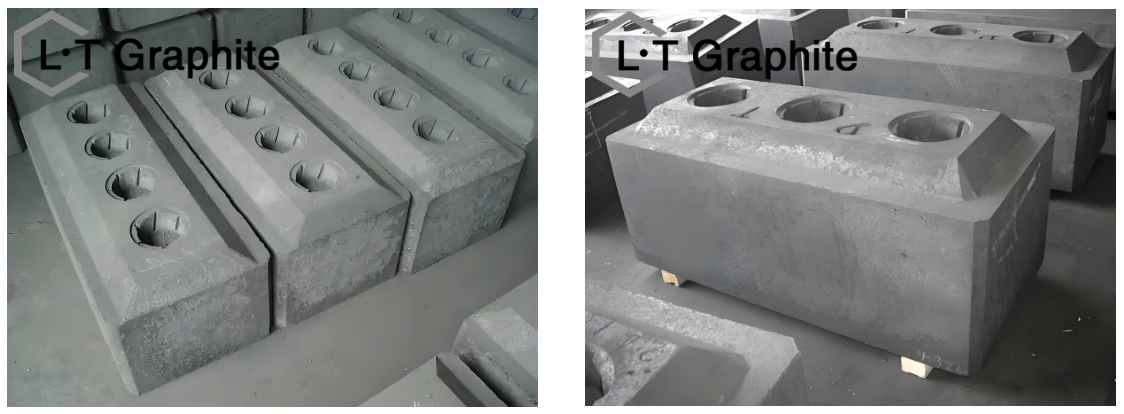
1. Core Application:
Hall-Héroult aluminum electrolysis (the primary application).
Serving as consumable carbon anodes in aluminum electrolytic cells, they perform two main functions:
1) Conducting high-amperage direct current to deliver electrical energy into the molten cryolite electrolyte;
2) Directly participating in the electrochemical reaction, where the carbon is oxidized to form CO2, thereby facilitating the reduction of alumina into liquid primary aluminum.
2. Yellow Phosphorus Production:
Used as conductive electrode material in electric furnaces for yellow phosphorus production, participating in high-temperature reduction reactions.
3. Titanium Smelting:
Used as conductive anodes in the electrolytic refining process of titanium metal.
4. Silicon Smelting:
Used as electrode material in electric furnace smelting for industrial silicon and polysilicon; demand in this sector is growing rapidly alongside the expansion of the photovoltaic and semiconductor industries.
5. Others:
Pre-baked anodes are also used as conductive electrodes in certain high-temperature electric furnaces, such as those for calcium carbide and ferroalloys.
1. Excellent electrical conductivity and energy efficiency:
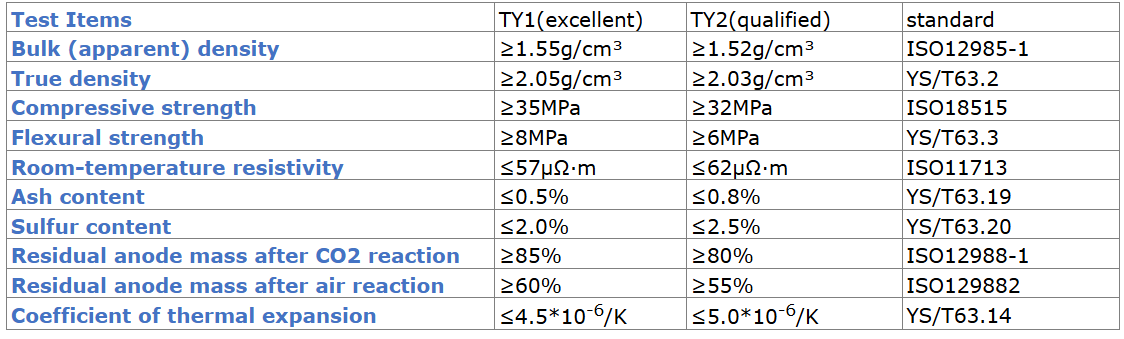
Low electrical resistivity allows for high current density and minimal voltage loss during electrolysis, reducing energy consumption in aluminum smelting and making them suitable for large, high-efficiency electrolytic cells.
2. Superior oxidation resistance and low consumption:
They exhibit high residual anode retention when exposed to CO2 and air, slow oxidation rates at high temperatures, and minimal carbon slag shedding. This results in lower net anode consumption and material costs, as well as fewer impurities in the molten aluminum and consistent product quality.
3. High mechanical strength and durability:
With high compressive and flexural strength, they resist cracking and spalling during transport, hoisting, and high-temperature cell operations, thereby reducing the risk of production downtime caused by anode breakage.
4. Factory pre-baking and eco-friendly on-site operations:
The baking process is centralized at the carbon plant, eliminating the generation of large amounts of pitch fumes in the aluminum electrolysis workshop. This ensures a better working environment and superior environmental performance compared to traditional self-baking anodes, meeting stringent global environmental regulations.
5. Uniform structure facilitating automated production:
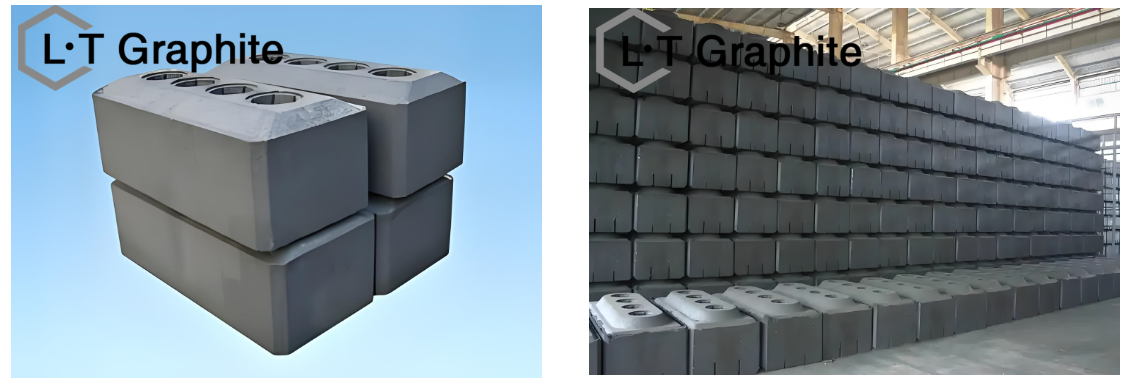
Featuring a standard rectangular shape with a carbon bowl at the top, they allow for mechanized assembly of steel conductor rods and automated anode hoisting and replacement. This compatibility with modern automated production lines in large-scale aluminum smelters enhances overall production efficiency.
6. Recyclable anode butts:
Spent anode butts can be cleaned, crushed, and reused as raw material for producing new pre-baked anodes, enabling material recycling and lowering comprehensive production costs.
7. Good thermal stability:
A low coefficient of thermal expansion provides strong thermal shock resistance in the rapidly fluctuating temperature environment of electrolytic cells; they are resistant to thermal cracking, ensuring more stable production operations